Resolving Oracle Server Problems
The majority of applications run perfectly after being set up in a Fresh Start environment on DaDesktop (DD). However, there are rare cases—perhaps one or two programs—that behave unexpectedly because of how the cloning process works, and they require a couple of additional steps to function properly.
System Details
-
Oracle Database 19c—other releases might show similar behavior
- Setup was done on a Windows 10 template
Fresh Start Fix Notes
-
Keep in mind that this is a general guide for resolving issues with this application inside Fresh Start. The specific steps might vary based on your particular configuration.
-
Summary: Here’s the fix for Fresh Start. The original machine uses a specific hostname, but after cloning, the name changes, so that original hostname becomes irrelevant. Instead, we switch to 127.0.0.1 (localhost). Plus, extra database Listeners often get added and muddle the setup—it’s best to remove them, as shown below.
Fix process
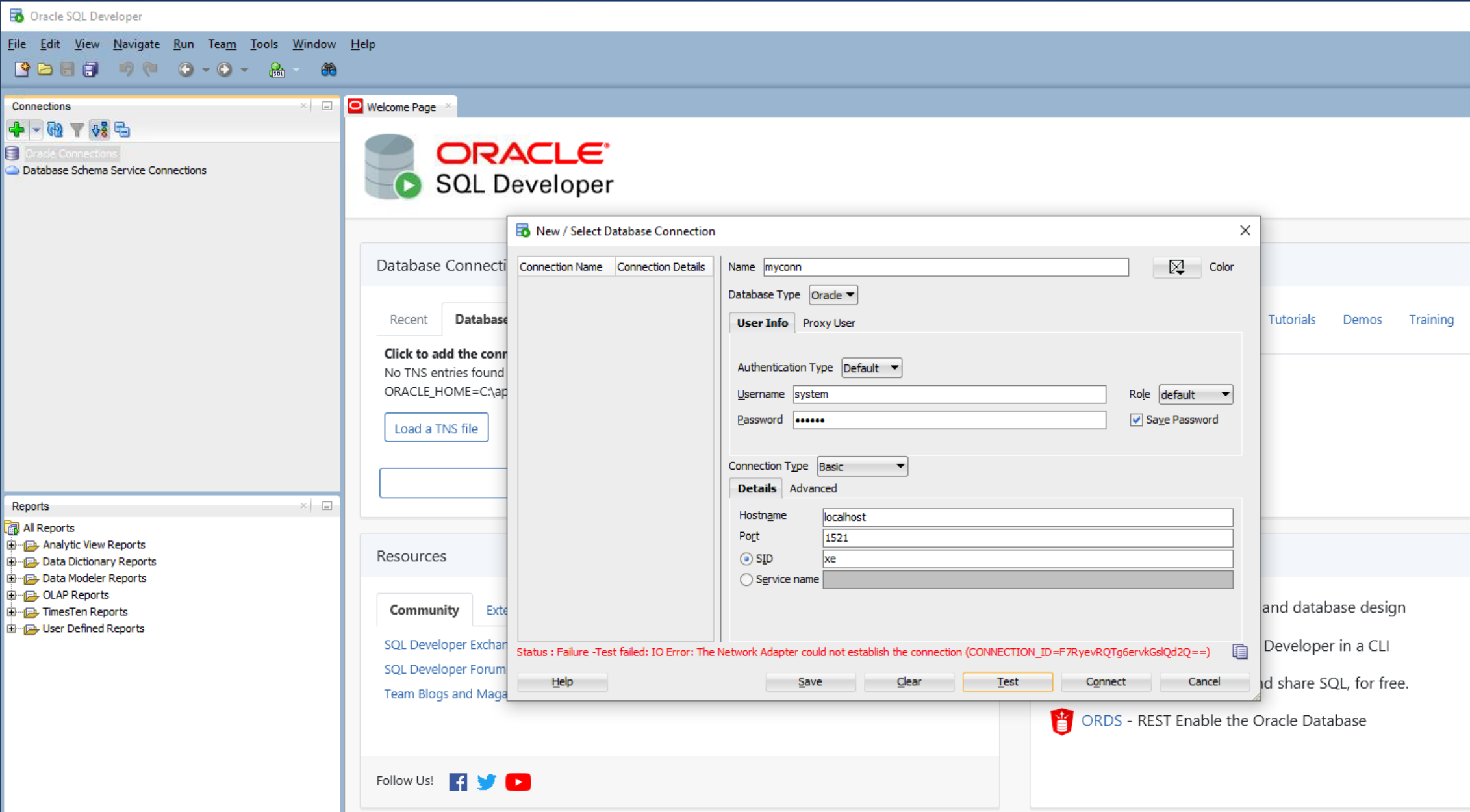
1. Below is an example of a network connection failure when using Oracle SQL Developer.
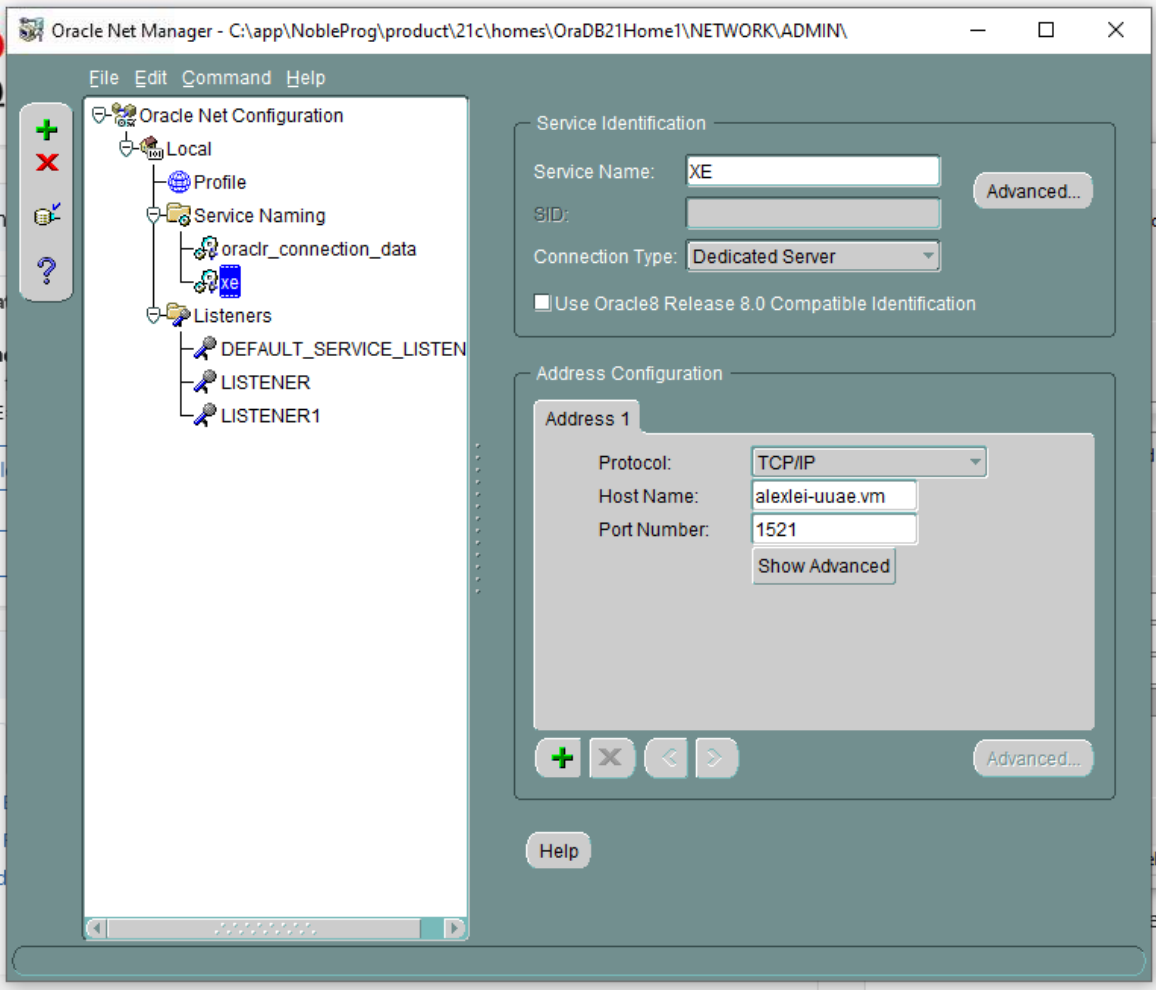
2. Open up the Oracle Net Manager app.
The xe service details are displayed, along with the original host information (in this example, alexei-uuae.vm).
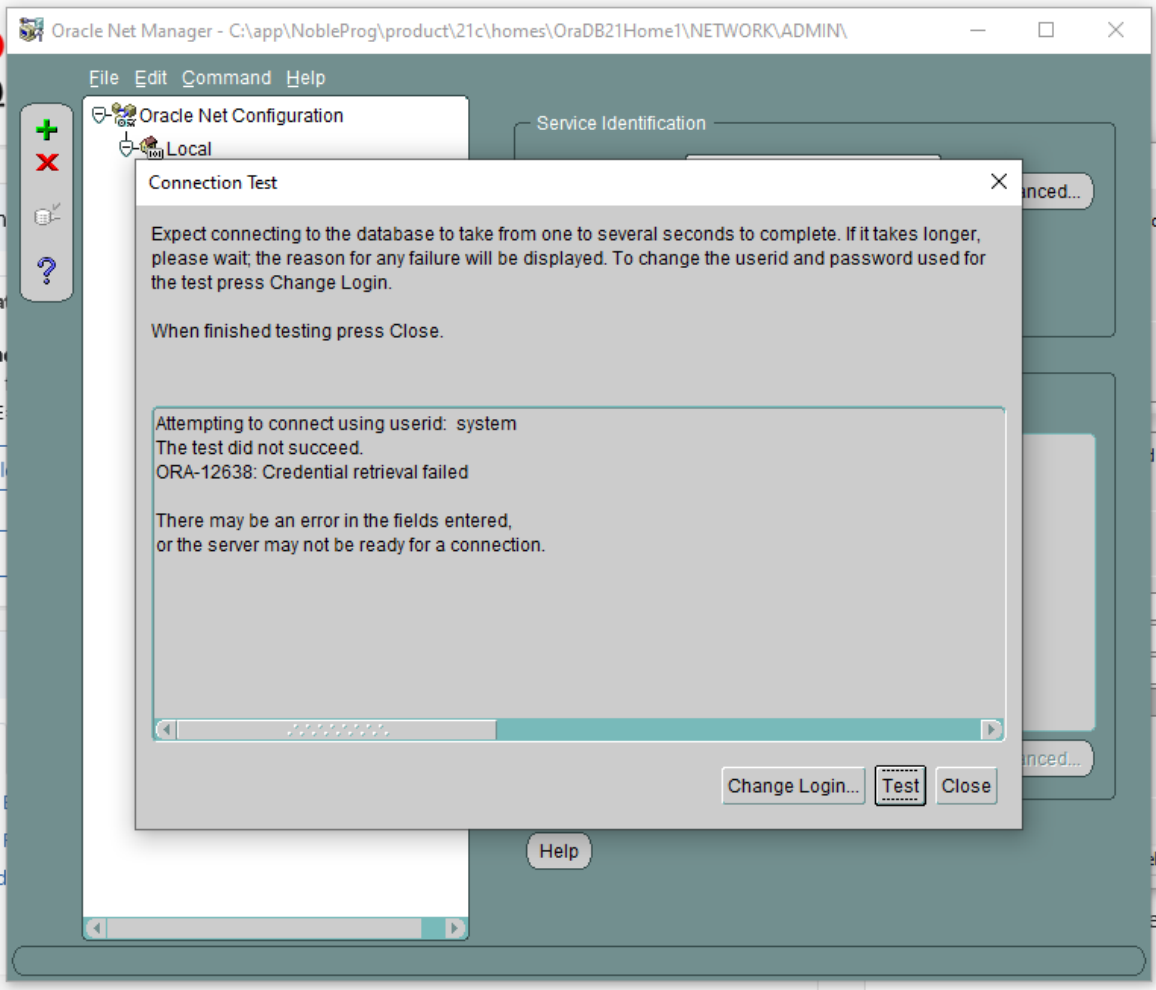
3. The connection test fails when entering the user ID 'system' and the password.
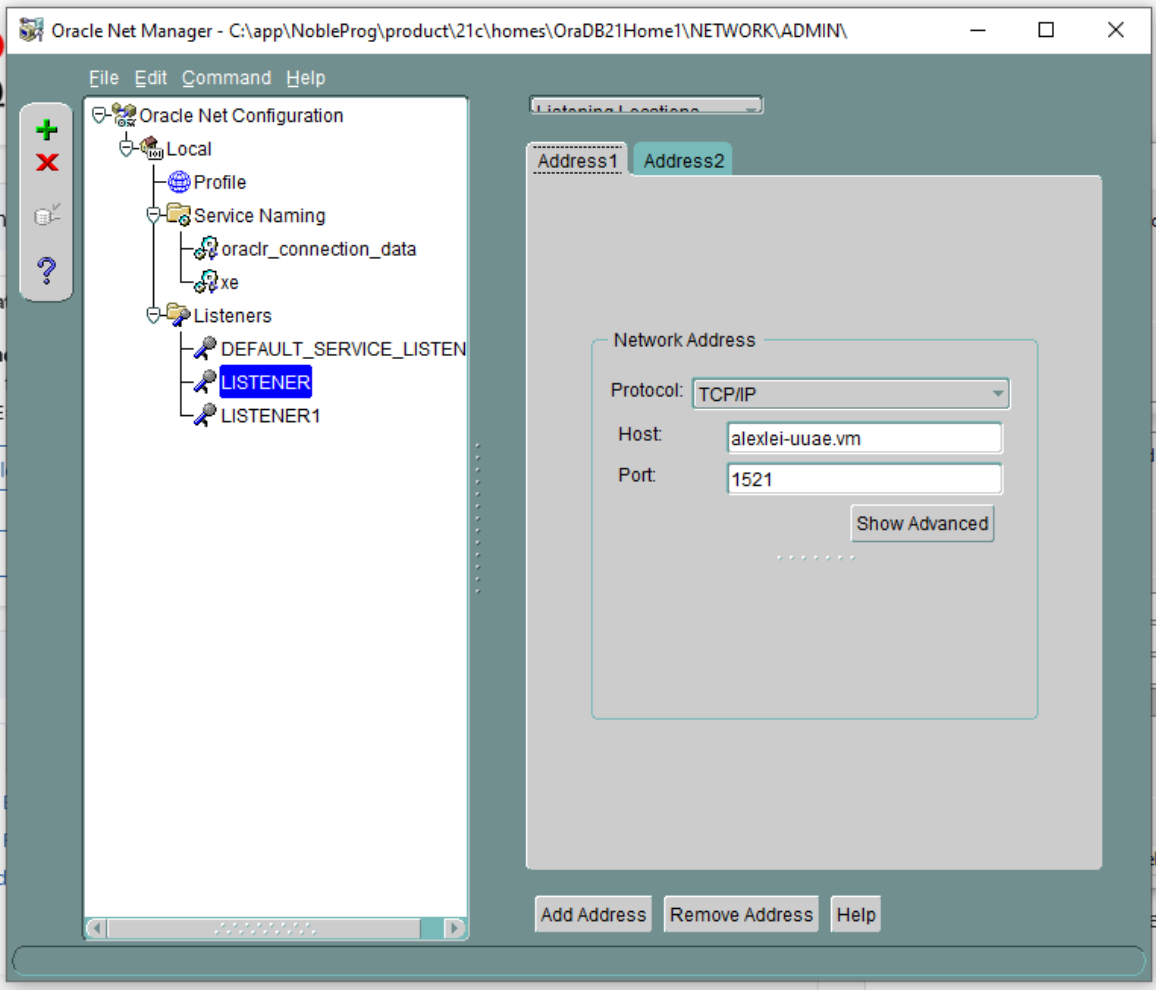
4. In Oracle Net Manager, under Listening Locations, you'll find the Listener.
It displays the original hostname 'alexei-uue.vm', which we'll need to modify.
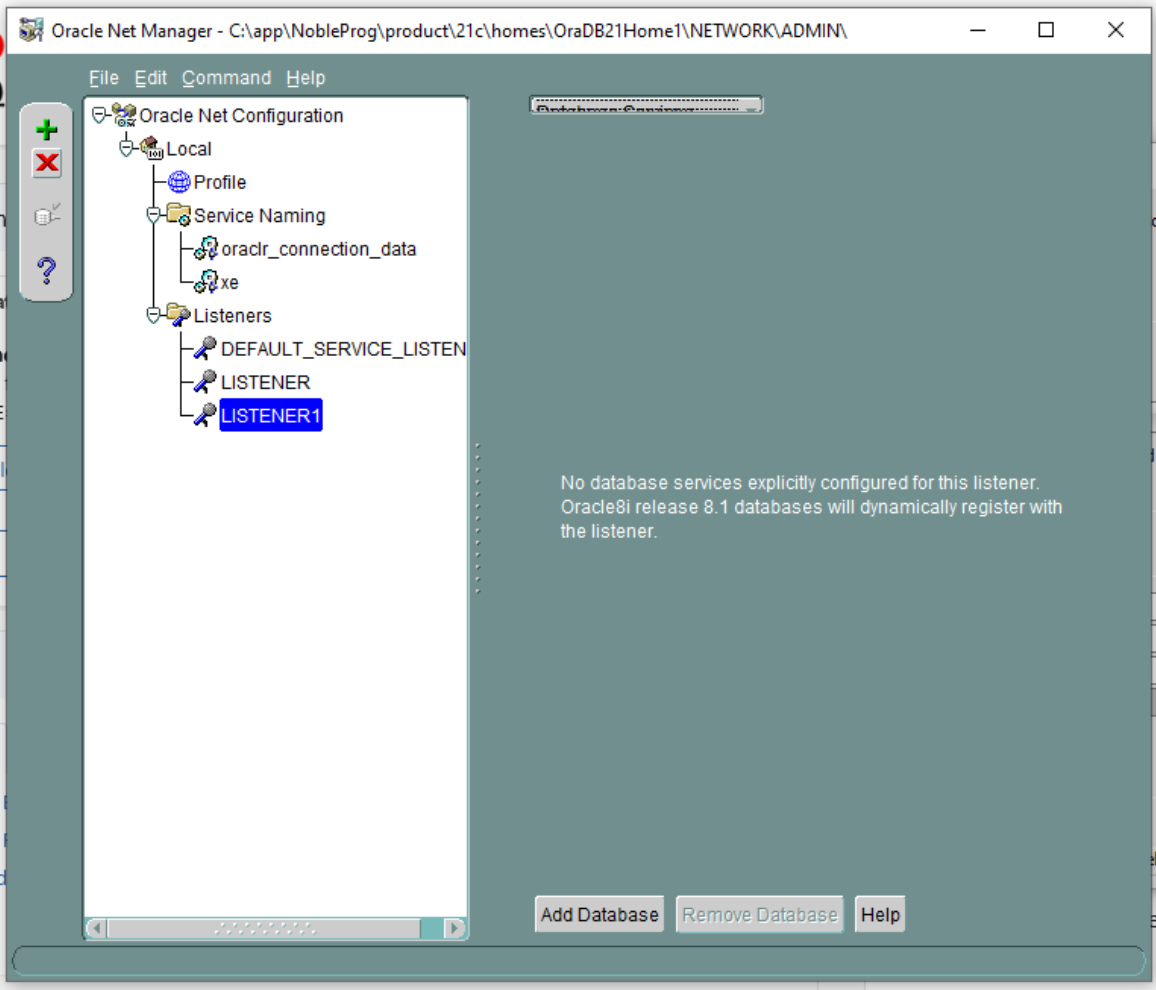
5. You’ll see that no databases are set up to use LISTENER1. Look for any Listeners that don’t have database services configured—if you find them, go ahead and delete that Listener.
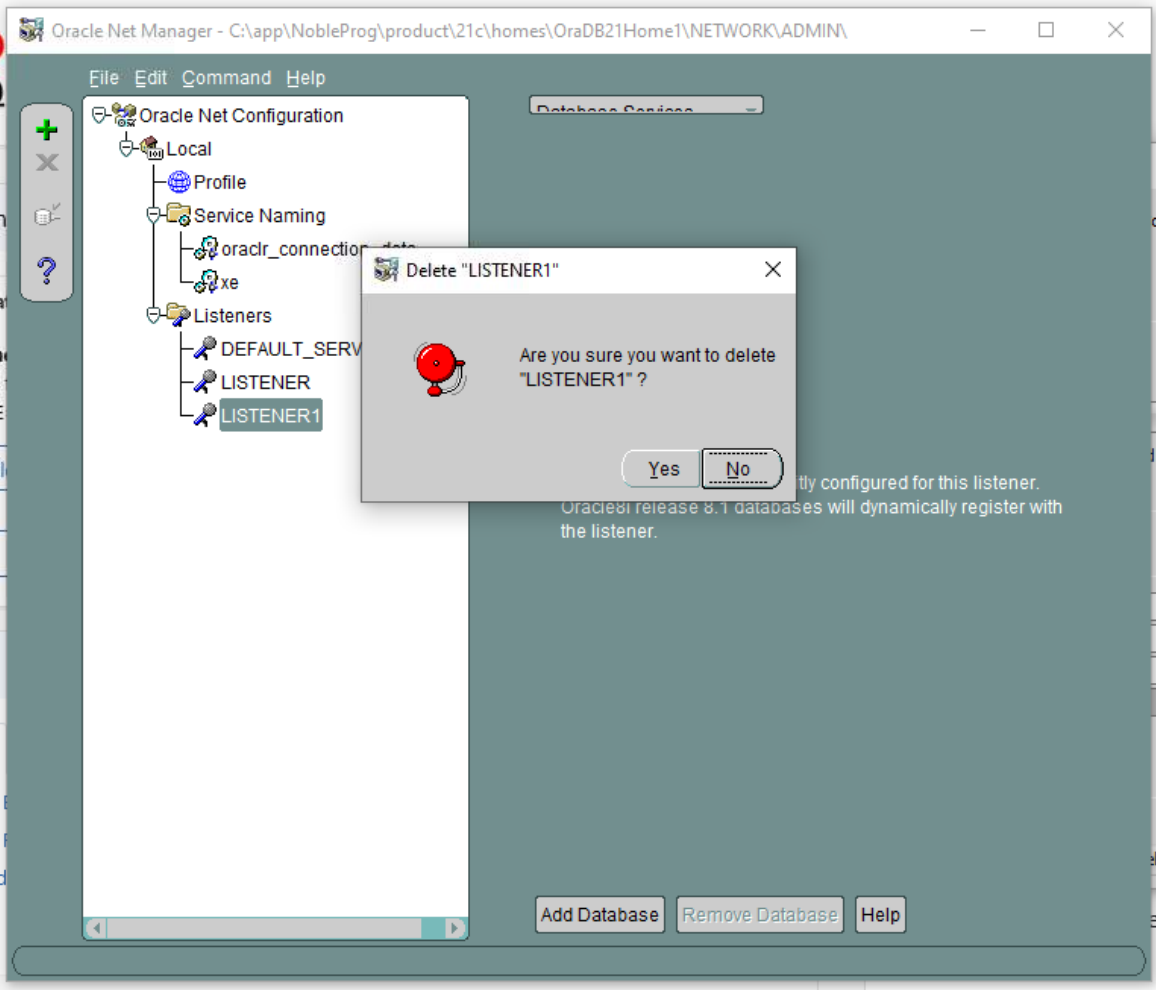
6. So, delete LISTENER1 and confirm the action. Keep in mind this is just an example of what we encountered during our own setup—your situation might differ, but it’s shown here for reference.
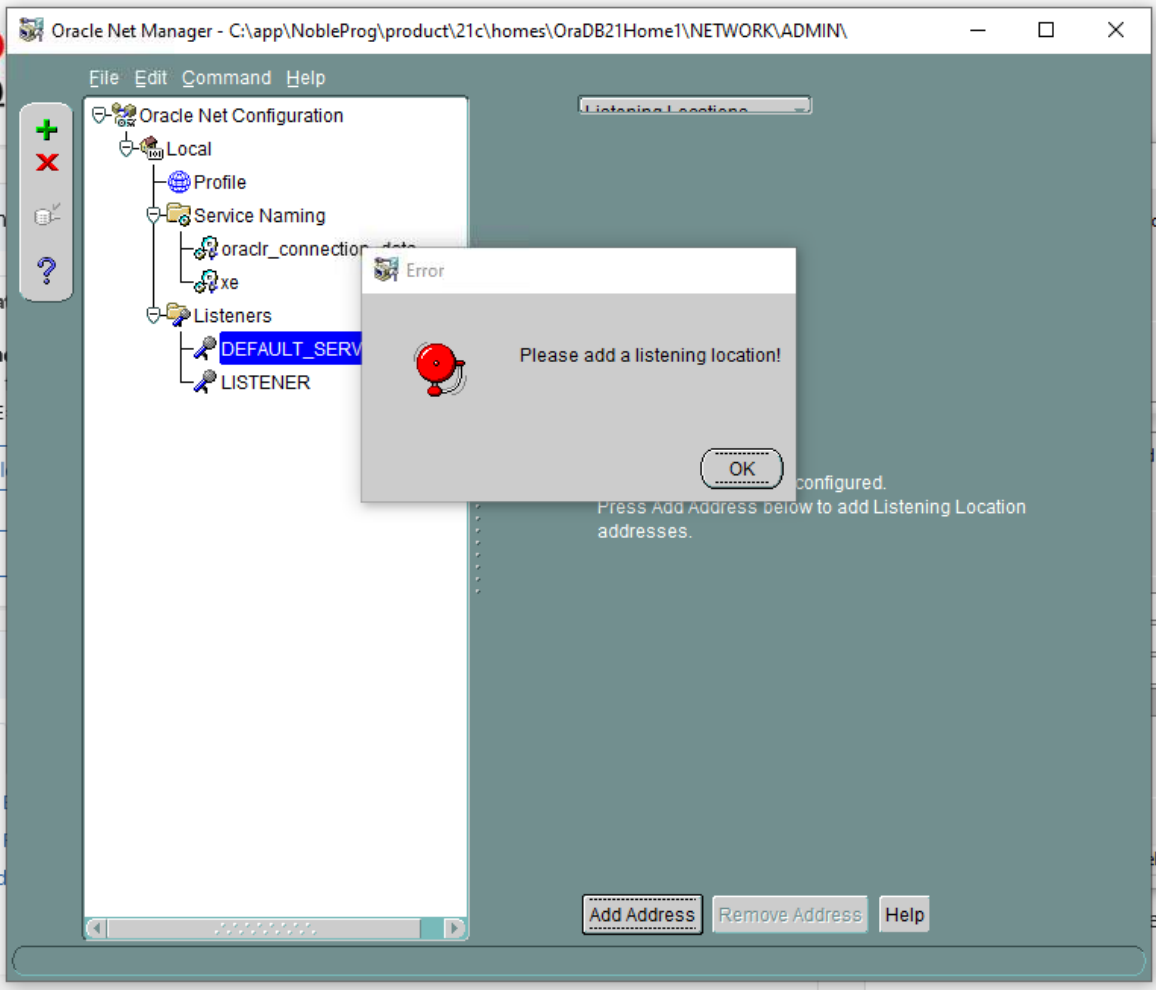
7. Now for the DEFAULT SERVER LISTENER—go through each Listener one by one. In this case, there’s no listening location defined.
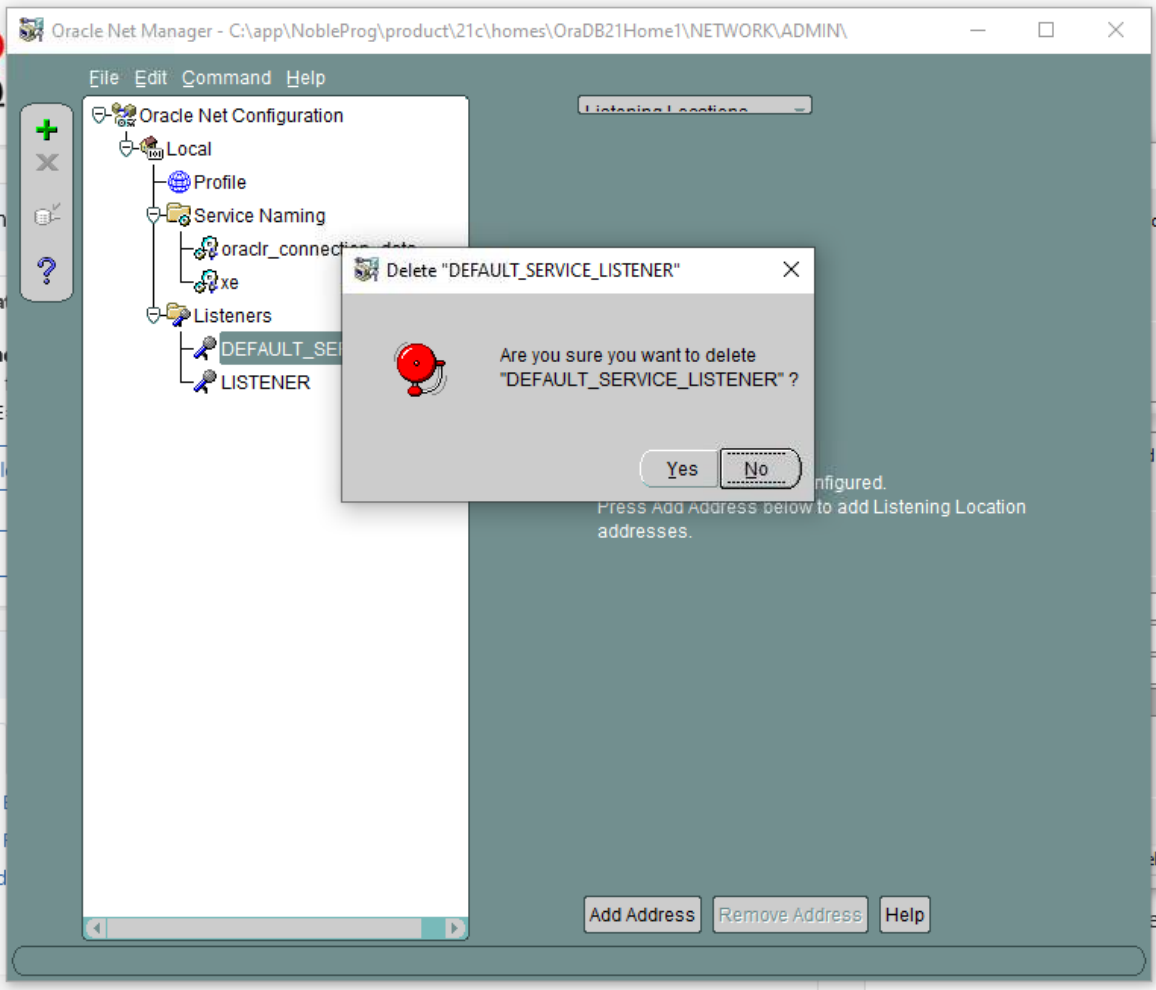
8. So, delete the DEFAULT SERVER LISTENER.
9. If only LISTENER remains, you'll notice the existing VM hostname (it needs to be updated because it changes during cloning).
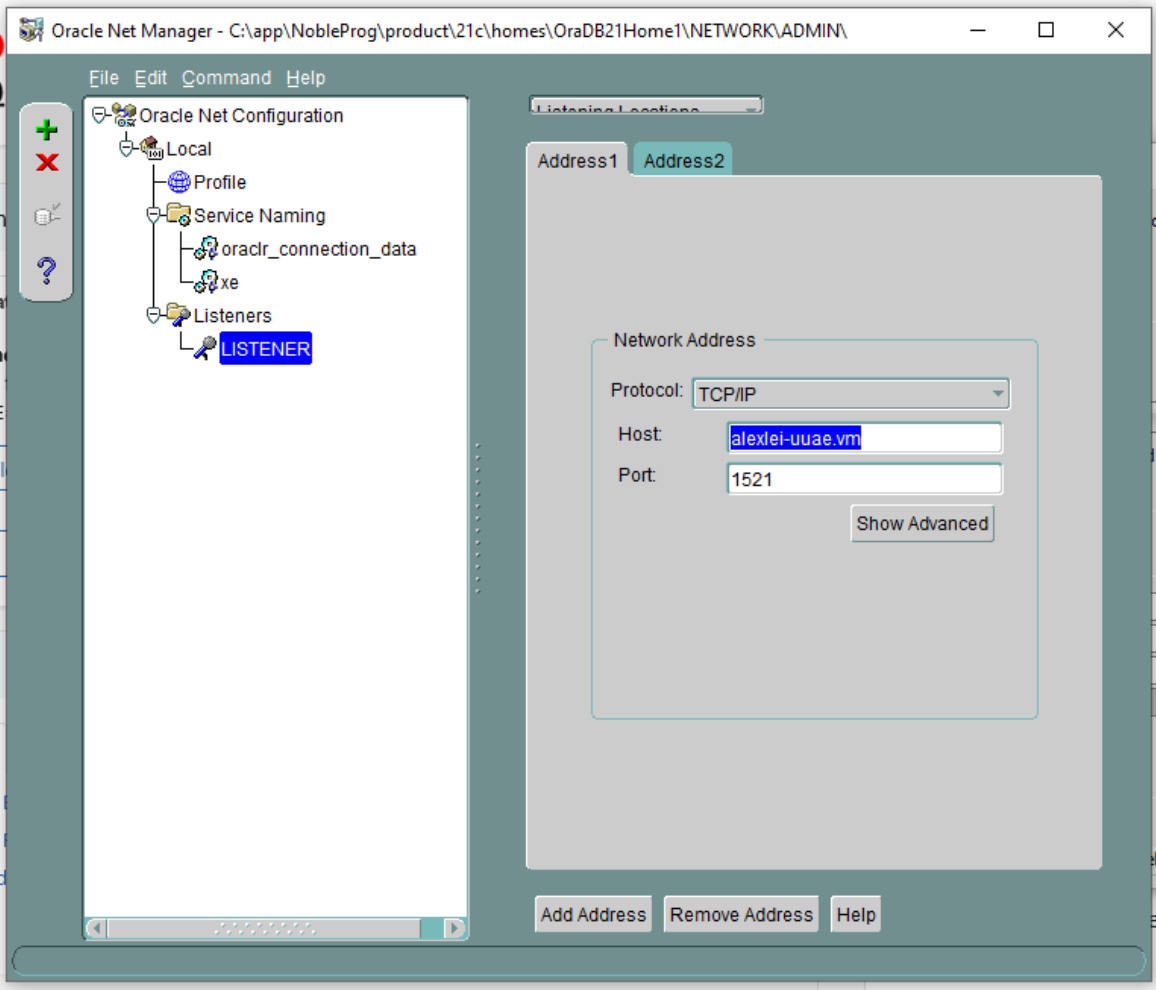
10. Swap the host from whatever it currently is (in our example, 'alexi.uuae.vm') to 127.0.0.1, while keeping the port unchanged.
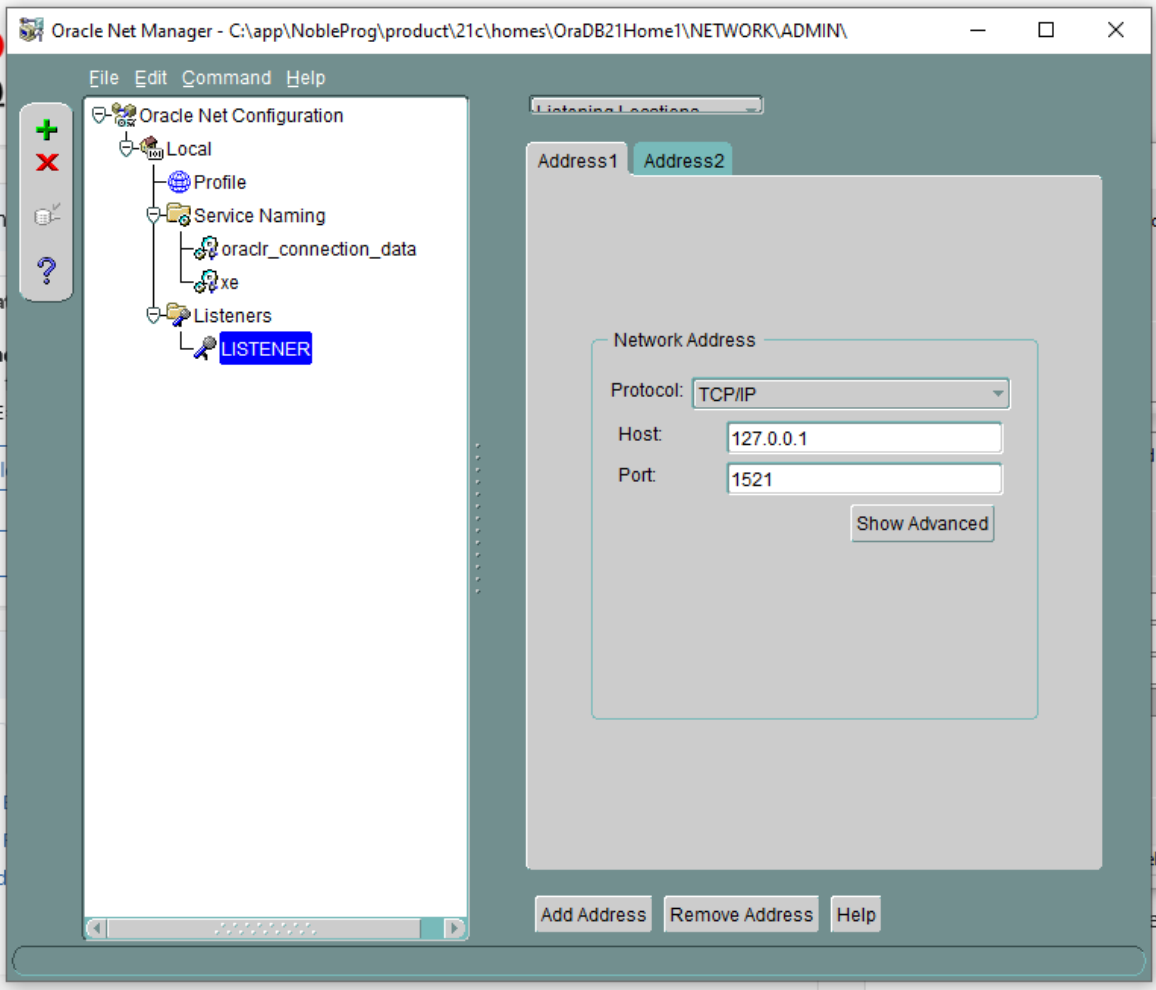
Now, let’s configure the existing database.
11. Set the SID to XE and the Global Database Name to xe.local.
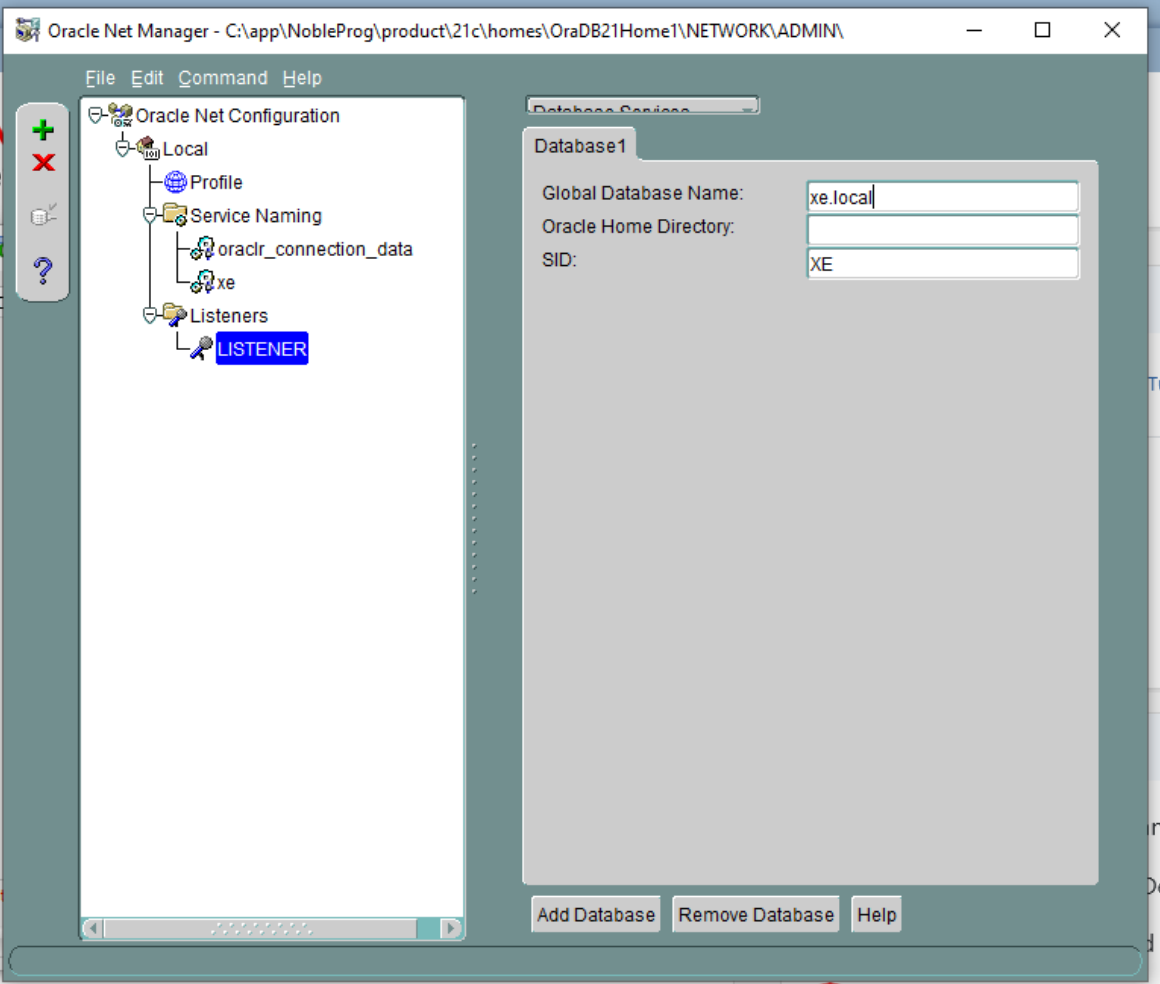
12. Save the network configuration, then exit the application.
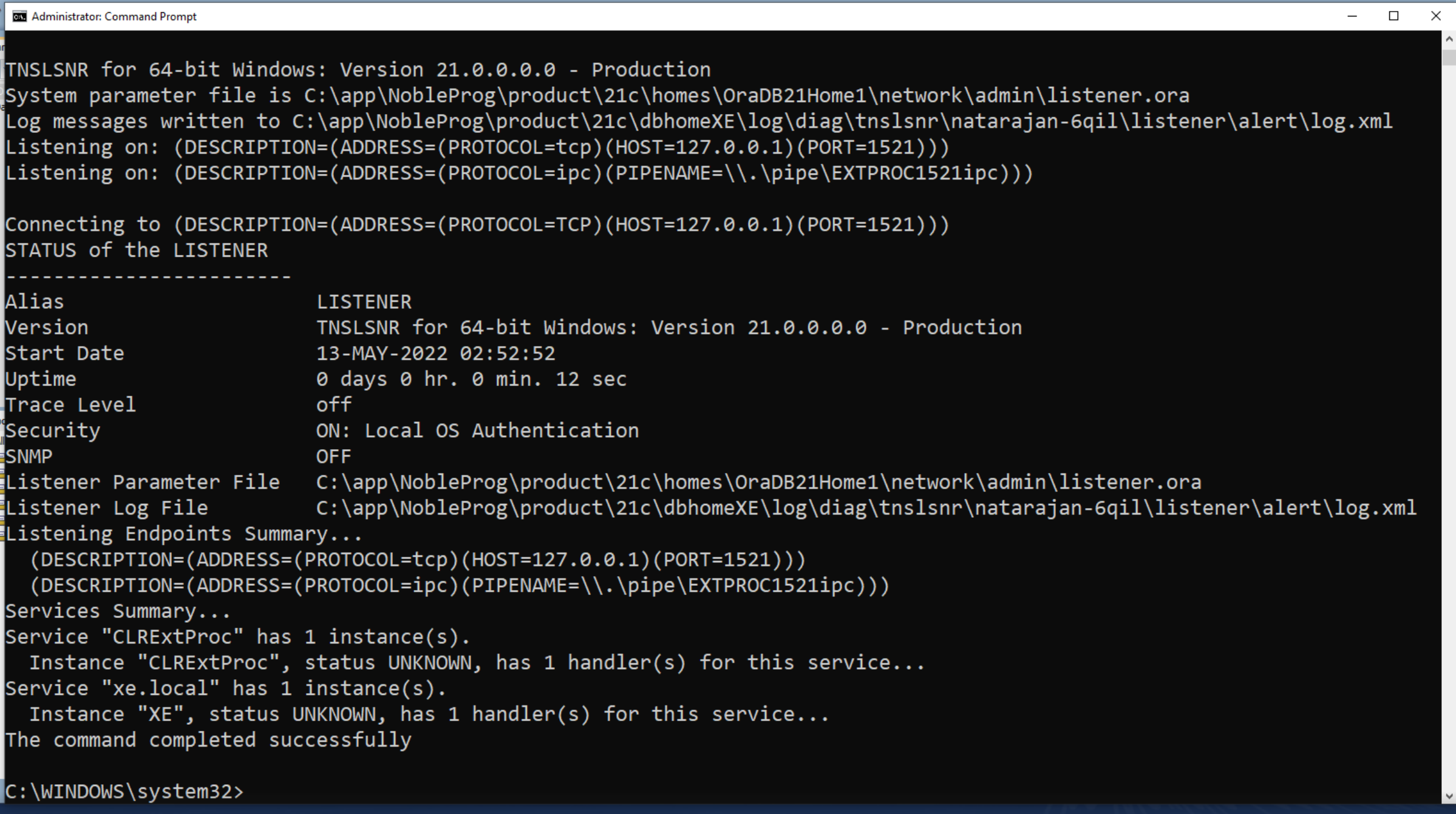
13. Open a command prompt—we'll restart the listener service. Type 'lsnrctl status', then 'lsnrctl stop', and finally 'lsnrctl start'.
Launch Oracle Net Manager once more.
14. Remove alexei-vm from the Service-naming-> xe section.
15. Change the host to 127.0.0.1.
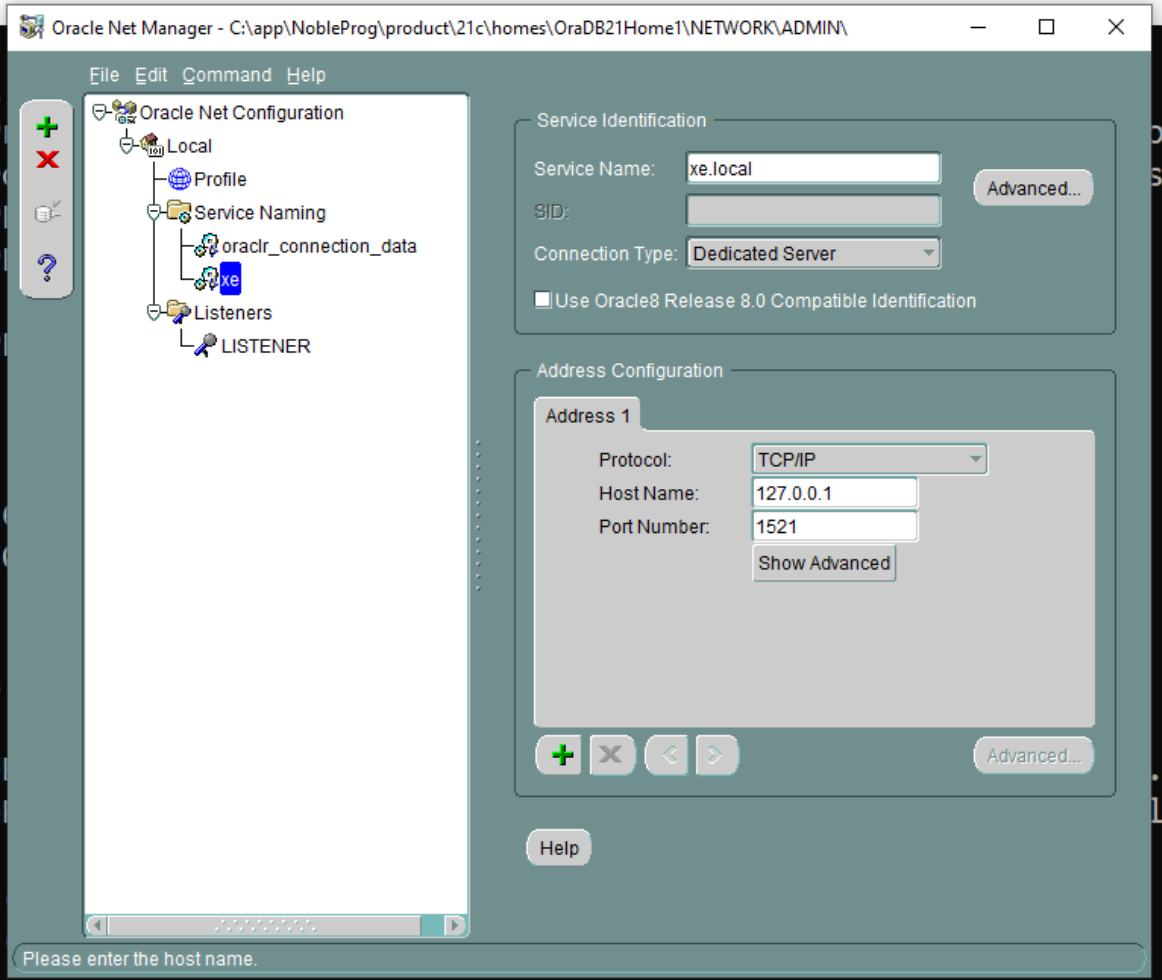
16. Save the network connection.
17. To run the Connection Test, click the little button in the image below.
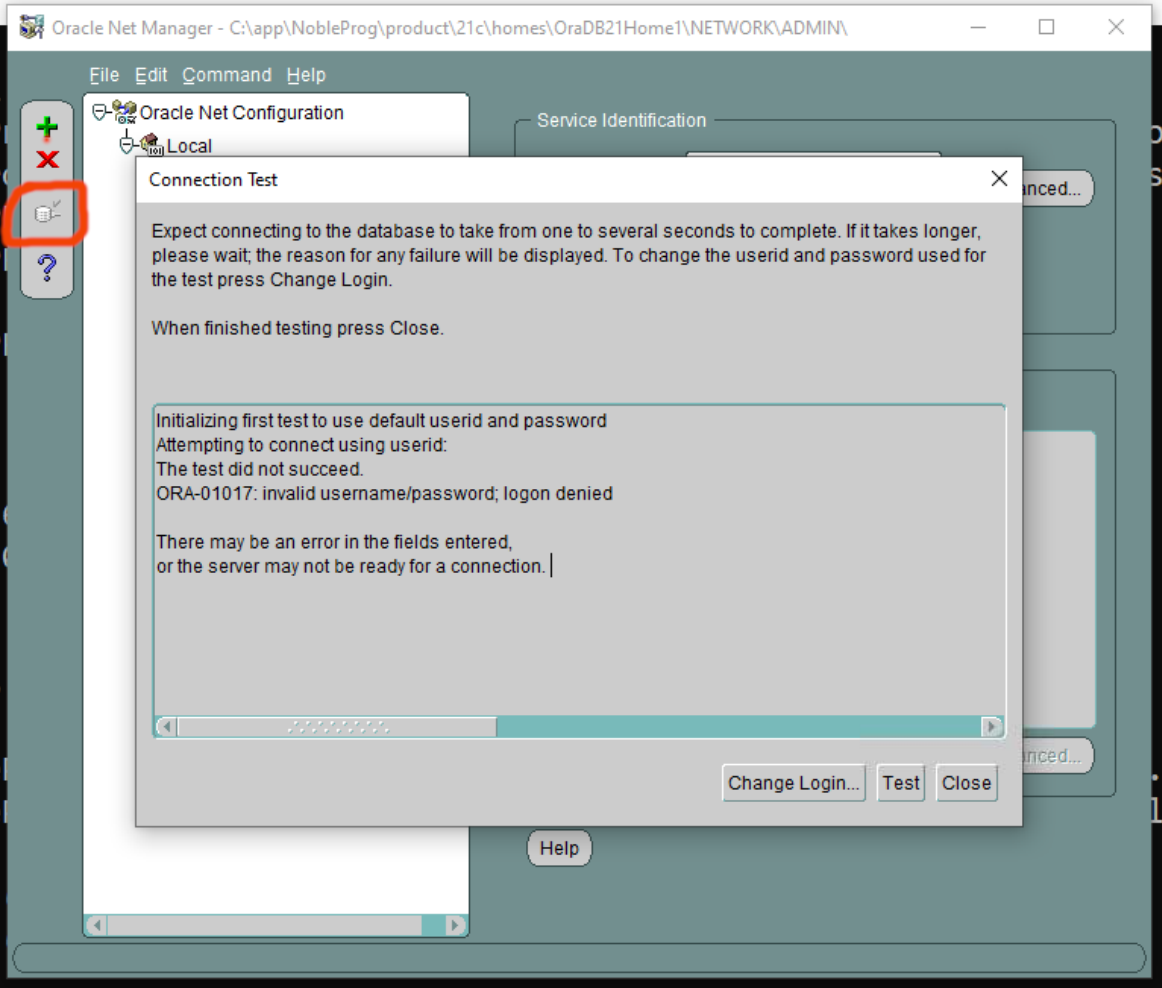
18. Adjust the login: change the username to 'system' and enter the password used.
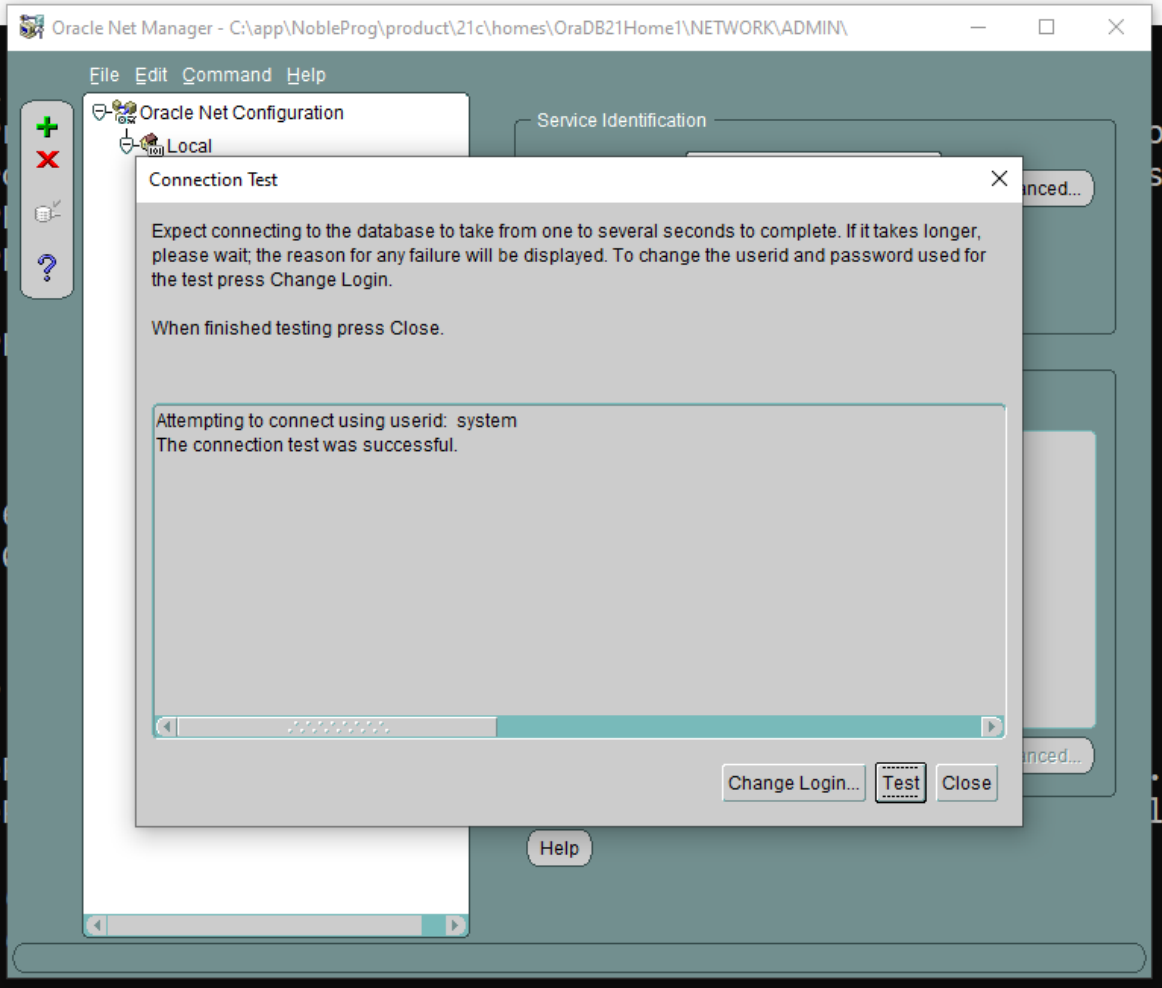
If needed, save the network connection.
19. Return to the main Oracle SQL Developer window and run the connection test again.
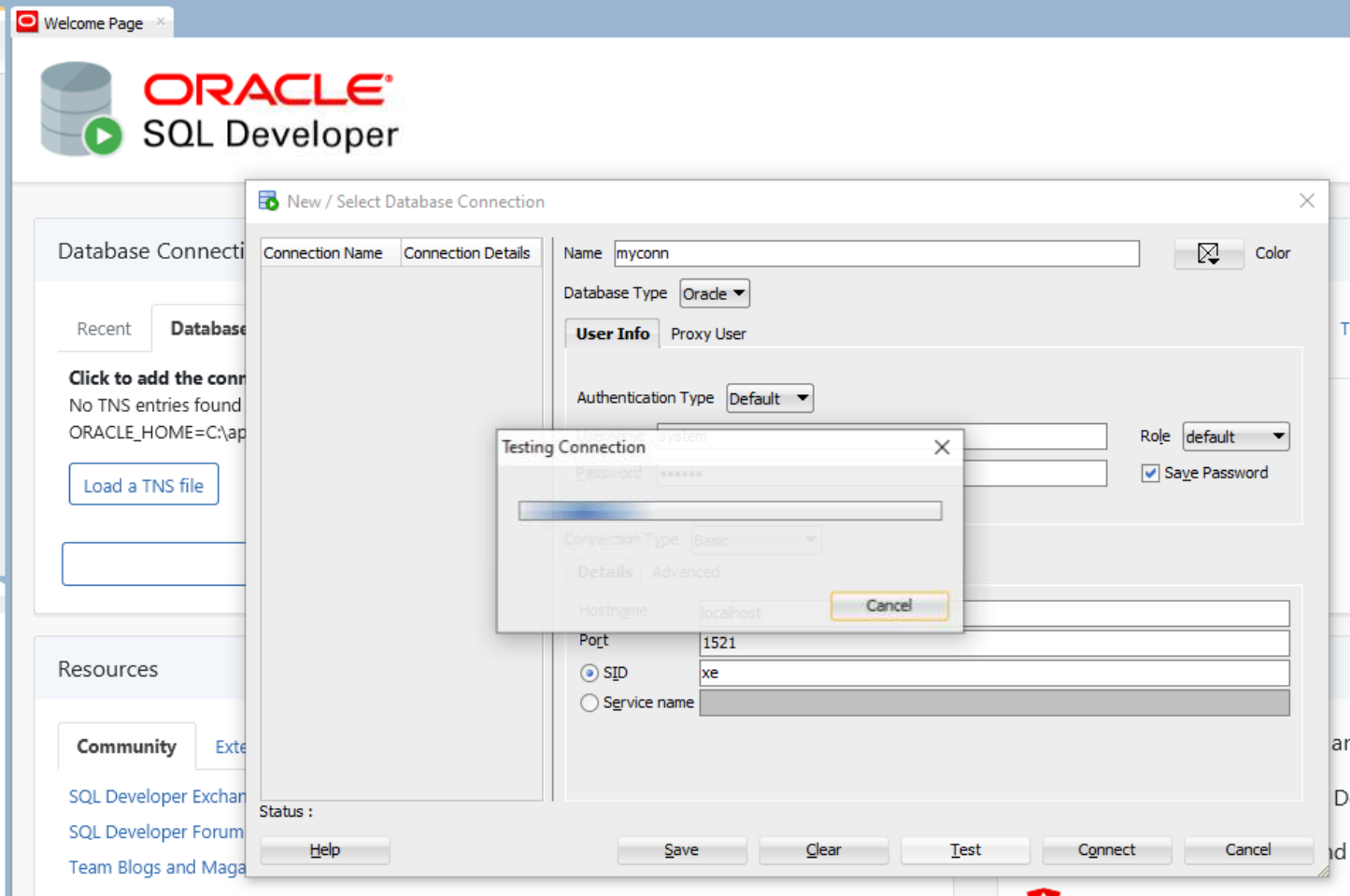
20. If the connection is successful, go to the Connections pane on the left and expand Oracle Connections to verify that the database tables appear as expected.
21. Proceed with any remaining FreshStart machine configuration you need, then clone the FreshStart machines to Trainer and Participant machines.
The Oracle Database server should now run correctly on both Trainer and Participant machines.
If you still encounter issues, contact DaDesktop Support via the chat app—we're happy to assist.